
Analysis
How a full power grid became Utrecht's biggest housing problem
Since 1 July, the Utrecht region is the first in the Netherlands where new electricity connections are on hold — for businesses and households alike. An analysis of what the freeze means for the 60,000 homes the city still wants to build, who now gets priority on a full grid, and why relief arrives in 2031 at the earliest.
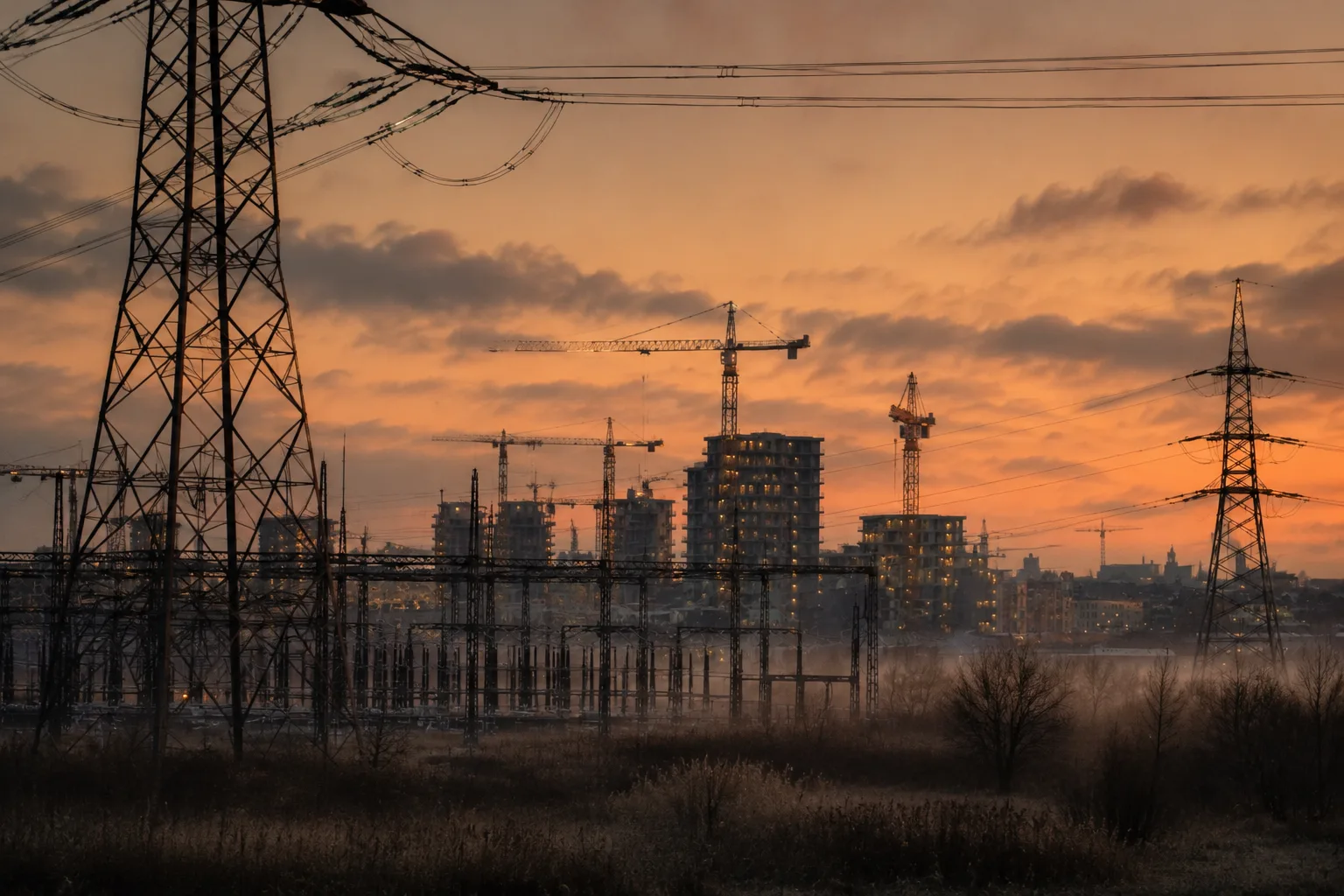
Since 1 July, anyone in the metropolitan area between Woerden, De Ronde Venen, Zeist and Houten who asks grid operator Stedin for a new or heavier electricity connection joins a waiting list. The freeze — the first near-total regional connection stop in the Netherlands — applies to businesses and households alike. It covers the new office that wants a socket, but also the family that wants to swap a gas hob for induction, install a heat pump, or hang a charger next to the front door. State secretary Jo-Annes de Bat has called it a “pause button” to keep the grid safe. For a city that says it needs roughly 60,000 extra homes by 2040, it is considerably more than that.
This is an analysis of how Utrecht got here, what the connection stop actually blocks, who decides which projects still get power, and why the earliest structural relief is pencilled in for 2031 — in the best case.
How the grid filled up
The stop did not come out of nowhere; it arrived in slow motion, in letters. Since October 2021 the provincial grid has had no room for new large-scale solar and wind feed-in. Since November 2022 there has been no room for new large business connections either: the city informed its council that month that large consumers “can no longer simply get electricity” and would be placed on a waiting list, with bottlenecks on TenneT’s high-voltage grid not expected to be resolved before 2029 at the earliest.
In October 2023, TenneT and Stedin quantified the problem: the grid serving Flevoland, Gelderland and Utrecht was short roughly one gigawatt of transport capacity until the end of the decade — with a rising risk of outages at peak hours. In early 2024, Stedin declared formal congestion at the Lage Weide and Merwedekanaal substations, the two stations that feed much of the city’s north and west, warning that delayed works could stretch the large-consumer waiting list there to 2034. By February 2025 local reporting summarised the situation bluntly: the grid north of Utrecht Centraal is full.
In February 2026, TenneT warned that without firm additional measures a full connection stop was looming. Two months later, the government announced exactly that: from 1 July, no new or heavier connections in congestion area 1a, the urban region roughly bounded by Breukelen, Driebergen and Vianen. Large housing areas around Amersfoort and Veenendaal escaped a formal stop, but operate under “very limited capacity” and the same priority rules.
The arithmetic of 60,000 homes
Set the freeze against the city’s own numbers. Utrecht’s population forecast puts the housing need at about 60,000 extra homes between 2019 and 2040; the city’s planning monitor counts a net expansion of around 52,600 homes scheduled between 2023 and 2039. At provincial level, the housing deals signed with the state add up to 87,558 homes by 2030, of which more than 63,000 sit in the U10 region around the city. All of that construction now has to fit through a grid that is officially closed to new demand.
The freeze comes with one large exception. Around 35,000 homes in projects for which capacity was already reserved — Merwede, Cartesiusdriehoek, Beurskwartier and parts of Leidsche Rijn among them — can still be connected. Stedin keeps a list of this “work in hand”, drawn up with the province and municipalities. Everything not on it joins the queue, including later phases of the very same districts.
How much housing is actually at risk? The city’s impact analysis, published on 30 June, counts at least 25 projects that depend on grid expansion or heavier connections — thousands of homes, concentrated in Leidsche Rijn, Oost and Cartesius/Wisselspoor. Municipal scenario analyses estimate that up to 20 percent of planned construction between 2027 and 2030 could be delayed or cancelled. That widely quoted “one in five” figure deserves its label: it is a projection by the city and its advisers, not a measured outcome. The province’s own assessment is broader still — it calls grid congestion one of five binding constraints on housing, says more than 30 percent of construction in the province is substantially affected, and has warned that a lasting stop on small connections would put a brake on 42,500 to 52,500 homes.
Grid congestion is no longer an abstract problem of the future.Senna Maatoug, alderman for energy and climate, in the city’s impact analysis
Merwede, or how to build when the grid says no
The clearest sign that the housing programme has internalised the constraint is Merwede, the car-free district rising on the old industrial strip along the Merwedekanaal. The area sits next to one of the two congested substations, yet its first 4,250 homes are going ahead — because the developers agreed to a collective heat-and-cold storage system and a fixed “grid budget” for the entire district, and could show that the whole neighbourhood, amenities included, will draw less electricity than 250 conventional all-electric homes. On that basis TenneT and Stedin accepted a contractual ceiling on the district’s demand.
The province now presents Merwede as proof that “grid-conscious building” works. It is also proof of something less comfortable: getting a large project connected in this region now requires engineering, legal and financial gymnastics that most smaller projects — an infill block here, a school there — cannot perform. The exception is instructive precisely because it is exceptional.
The gas paradox
To keep the lights on until the grid is expanded, Stedin and TenneT announced in August 2025 that they would contract 60 megawatts of “controllable generation” — in plain terms, temporary gas-fired generators. The contract went to a consortium of Flexpowernet and Rolls-Royce, whose mtu units are being installed this quarter: 24 generators spread over sites including the future Strijkviertel business park (around 30 megawatts, the first and largest location), Lage Weide, Mijdrecht and Groenekan. At peak they can supply the equivalent of some 60,000 households, covering an estimated quarter of the province’s need for controllable generation. They are expected to stay until the grid reinforcements are ready — around 2033 — and then move on to whichever Dutch region is congested next.
The irony is hard to miss, and the NOS said it out loud: a country working to get off natural gas is deploying gas engines to keep its energy transition alive. Stedin stresses that the generators will stand idle nearly all year and run only during a handful of extreme peak days — cold snaps, dark windless evenings — which is why operations director Aline Arends describes the fuel as “transition gas — a bit of grey before green.” Note what kind of claim that is: the 60 megawatts and the locations are contracted facts; the “few days a year” and the negligible emissions are Stedin’s operational expectations, dependent on winters and consumption patterns nobody controls. Critics add a structural worry: a fleet of small gas engines is a far less efficient way to make electricity than the plants the grid was built around, and the longer the “temporary” period lasts, the more normal the workaround becomes.
Who gets electricity now?
Scarcity has produced a new kind of queue, and the rules governing it are barely six months old. In December 2025 regulator ACM amended the grid code to impose a mandatory priority framework in all congestion areas from 1 January 2026. Scarce capacity goes first to “congestion relievers” — batteries, controllable generation, anything that eases the bottleneck — then to safety functions such as hospitals, defence, drinking water, and only then to “basic needs”: housing, schools, public transport, telecoms and heat supply.
The second change bites harder. Until this summer, capacity for small consumers — households, shops, small offices — was reserved automatically; whatever large industry did, the socket in a new home was safe. From 1 July that reservation is gone. Small and large consumers share a single waiting list, ranked by social priority, and non-priority small users — an SME, a public charging point — now queue behind a housing project like everyone else. Applicants must prove they belong to a priority category; municipalities and the province help substantiate the claims. The province has already submitted one bundled application covering every housing-deal project through 2030.
The first beneficiary shows the new logic at work. De Nieuwe Tuin, the redeveloped former Rabobank headquarters next to Utrecht Centraal, would have waited years for a regular connection on the exhausted inner-city grid. Instead it installed two gas generators in its basement that fire up at peak load, easing pressure on the network — which qualifies the building as a congestion reliever and earned it a priority connection this month. A gas-free office, connected to the grid thanks to gas: as a symbol of 2026 Utrecht, it is hard to beat. The framework itself is hard law; how grid operators rank projects within the basic-needs category — this housing project before that school? — is where discretion, lobbying and politics now live.
Relief in 2031 — at best
The structural fix is not a policy but a set of construction sites. Three projects dominate the regional planning documents: expansion of the Breukelen-Kortrijk high-voltage station, a brand-new station north of the city — Utrecht Noord, at Haarrijn — and a new station near Amersfoort, each with associated Stedin substations and underground cabling. Utrecht Noord was originally sketched for around 2030; delays have pushed the official bandwidth to 2033, with 2035 as the worst case. With national acceleration packages, the province hopes to have Haarrijn live in 2031 — two years early, if permits, land acquisition and construction capacity all cooperate. The upgrades at Merwedekanaal and Lage Weide are phased between 2029 and 2034.
Until then, the region runs on the toolkit described above: generators, batteries, contract ceilings, priority queues and congestion management. The NOS has settled on a biblical summary — “seven lean power years” — and on current planning that is the optimistic reading.
What residents actually notice
For most Utrechters the freeze arrives in small print rather than blackouts. A new or heavier connection — induction cooking, a heat pump, a home charger, a home battery — now means a waiting list, and the city estimates that roughly 70 percent of Utrecht homes need a heavier connection to get off gas, which turns the connection stop into a brake on the city’s own insulation-and-electrification programme. Public charging points are already deliberately throttled on winter evenings between 16:00 and 21:00: cars charge slower, the grid survives the peak.
Small businesses and public amenities that need new connections have no guarantee at all and are being pointed towards their own workarounds — temporary generators, batteries, self-supply — which makes investing in a bakery oven or a sports hall more expensive and less predictable. Existing large users face a subtler instrument: under the electricity rules Stedin may temporarily cap the transport capacity of existing mid-voltage customers — cold stores, distribution centres, sports complexes — when the grid runs hot. Households sit at the very end of that escalation ladder; the government’s phrasing is that cutting homes off is “not likely for now”, which is reassurance with a time limit attached. The gas generators exist precisely to keep that scenario theoretical through the coming winters.
Everyone blames someone
The blame game has a clear geometry. The city and province point at the state and the grid operators: expansion has been too slow, and alderman Maatoug says Utrecht needs “the state, the province and the grid operators” to avert the worst. The grid operators point at permitting procedures, spatial planning and national rules that for years obliged them to connect whoever asked first, rather than whoever mattered most. Developers and housing corporations criticise both: the operators for failing to reserve capacity for announced housing, and the rule-makers for changing the queue halfway through the game. NEPROM director Fahid Minhas told parliament that grid congestion is “the biggest enemy of housing construction”, with roughly 200,000 planned homes under pressure across Utrecht, Gelderland and Flevoland. Utrecht’s housing corporations, meanwhile, face a separately calculated €750 million shortfall for their social-housing task to 2034 — grid congestion lands on top of an investment gap, not instead of one.
Is Utrecht worse off than everyone else?
Almost all of the Netherlands has congestion somewhere, but the honest comparison still singles this region out. Eindhoven reports 40,000 planned homes under pressure and a connection pause in part of its territory from the same 1 July date; regional politicians there sounded the alarm when Enexis said it could no longer reserve power for 62,000 planned homes to 2033. Around Amsterdam and Almere, some 60,000 homes may lack reserved capacity. The volumes elsewhere are comparable — what is unique to Utrecht is the breadth of the stop: the first region where the freeze reaches past industry and offices all the way down to household sockets, softened only by the 35,000-home reservation list.
That breadth is what turns an energy-sector problem into a city-shaping one. Between now and 2031 — the earliest date at which new high-voltage capacity can realistically arrive — Utrecht’s growth ambition runs on scenario planning, priority queues, contract ceilings and gas engines in fields. The question for every new plan in the city is no longer just where to build, but where to plug in.
Sources
- Reporting on Utrecht grid congestion and the 2026 connection stop
Published by Multiple (Stedin, TenneT, Gemeente Utrecht, Provincie Utrecht, ACM, NOS)