
Attributed reporting
No state money for Rijnenburg tram as Utrecht plans 22,000 homes
The funding gap does not cancel Utrecht's largest housing plan. It does leave the city facing a difficult question: how can a new district open without making already-busy roads busier?
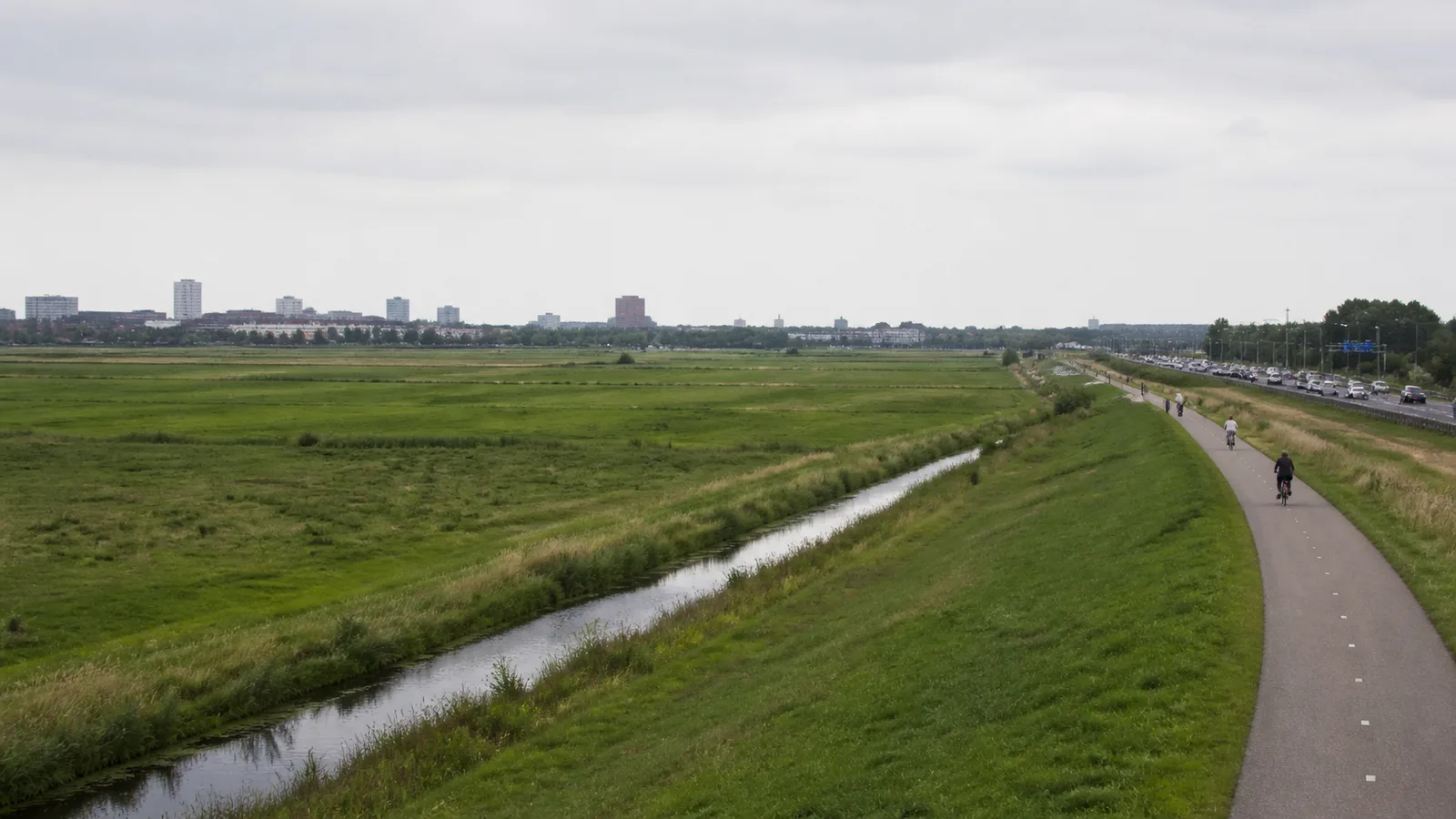
Utrecht's plan for a new district of at least 22,000 homes in Rijnenburg has run into its central transport problem: the national government says it currently has no money for the tram connection the city considers necessary.
Infrastructure Minister Vincent Karremans told RTV Utrecht that there is “no room for new initiatives such as the Rijnenburg line”, NOS reported on Friday. The branch towards the polder is estimated to cost €600 million.
That does not mean Rijnenburg has been cancelled, nor is construction imminent. Utrecht is still working towards building from 2035, and detailed spatial decisions are not expected before 2028. But the minister's statement sharpens a question that has been built into the plan for years: the city wants high-capacity public transport in place before thousands of residents arrive, while the money for that connection has not been secured.
A district designed around public transport
Rijnenburg lies south of the A12 and west of the A2, between De Meern, Nieuwegein and IJsselstein. The municipality is studying a district of 22,000 to 25,000 homes, mostly in apartment buildings, alongside workplaces for around 12,500 people, schools, shops, healthcare and a large park.
Its transport concept is deliberately low-car. Residents would park in mobility hubs, while safe cycle routes and fast public transport would carry much of the daily travel. Utrecht says the surrounding motorways and roads are already busy and that it wants to avoid adding large volumes of traffic.
The proposed rail connection is usually discussed as part of the Merwedelijn: a fast tram from Utrecht Centraal through the growing Merwede area, with a later branch towards Rijnenburg. The Rijnenburg branch is the unfunded part now at issue. It should not be confused with the wider Merwedelijn programme, for which separate routes, funding packages and studies are under way.
For residents, the sequence matters as much as the route. Opening a large district first and adding rapid transit years later could establish car-dependent travel habits that are difficult to reverse. That is why Utrecht has treated good public transport as a condition for development rather than an optional improvement after the homes are built.
The funding gap was already visible
The shortage is not entirely new. In a national MIRT infrastructure letter published in January, the government and Utrecht region agreed to prepare further studies into extending the Merwedelijn as the Rijnenburg line. The same letter said measures emerging from those studies did not yet have financial cover.
Landowners in the future district have offered to contribute €200 million towards the extension. According to Metropoolregio Utrecht, which represents the regional case for the project, that offer is still subject to further agreements and leaves a substantial gap against the estimated €600 million cost of the branch.
The new difficulty is the national context. The government said in June that there is not enough money or staff to carry out every road, rail and water project, and that maintaining existing infrastructure will take priority. Final choices on the wider infrastructure programme are due this autumn. Karremans told RTV Utrecht that this exercise concerns existing projects; the future Rijnenburg line is not on that list.
That makes an early national contribution less likely, but it does not settle every future financing decision. The government is also examining alternative funding, including private and European contributions. Utrecht, the province, neighbouring municipalities and national government are continuing transport and housing studies for the region.
What happens next
For now, the housing timetable remains long and provisional. Utrecht expects to complete its principles document for Rijnenburg in spring 2027, make spatial choices from 2028 and begin construction from 2035 at the earliest. The district itself would then take decades to build.
That leaves time to find a solution, but it also raises the stakes. Rijnenburg is one of the Netherlands' largest prospective housing locations and is intended to function as a complete urban district, not a distant housing estate reached mainly by car.
The immediate news is therefore not that 22,000 homes have disappeared. It is that one of the conditions meant to make those homes workable remains without a complete financial plan — at a moment when the national government is giving priority to infrastructure it already has.
Sources
- Karremans: no money available for tram line to new Utrecht district
Published by NOS and RTV Utrecht
- New residential district Rijnenburg
Published by Municipality of Utrecht
- MIRT letter January 2026
Published by Ministry of Infrastructure and Water Management
- €200 million for the Merwedelijn tram
Published by Metropoolregio Utrecht
- Cabinet: the foundation of our infrastructure must be in order
Published by Government of the Netherlands