
Attributed reporting
Utrecht-led study questions two Dobermann DNA tests for heart disease
Genetic data from more than 5,000 dogs support DCM3 and DCM4 as risk markers, but the authors say DNA results should supplement, not replace, clinical heart screening.
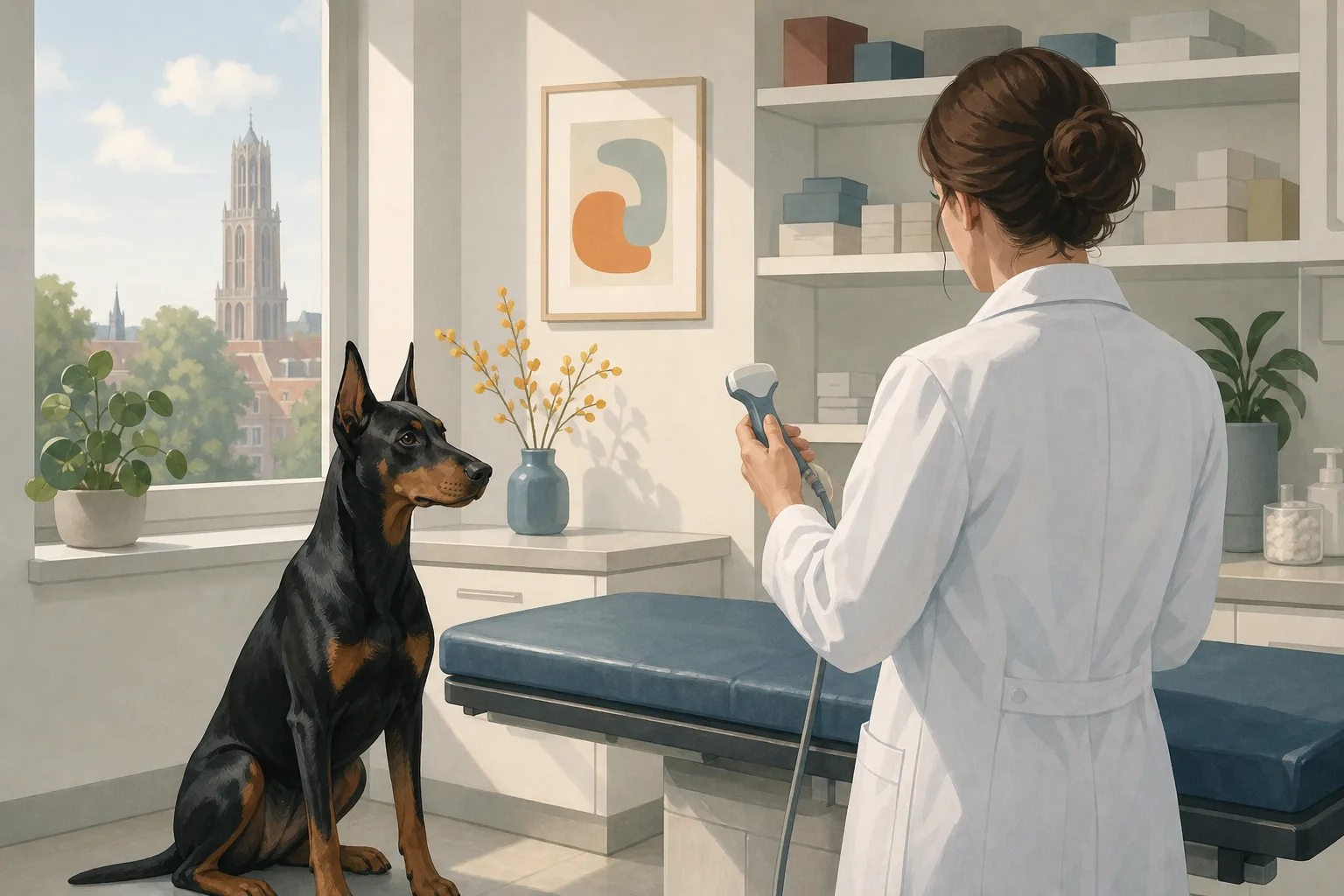
A Utrecht-led study using genetic datasets covering 5,087 Dobermanns found a heart-disease association near the DCM4 marker in European and North American dogs, while earlier signals near the genes behind the widely used DCM1 and DCM2 tests were not replicated. Utrecht University announced the results on 29 October 2026.
The condition is dilated cardiomyopathy (DCM), in which the heart muscle weakens. A 2010 European study cited in the new paper reported a cumulative prevalence of 58.2 percent in Dobermanns, making it a major health concern for the breed.
What the study found
The work was published in the peer-reviewed journal *Animal Genetics* by researchers from Utrecht and several international partners. They combined datasets from different genetic testing platforms and examined markers known as DCM1 to DCM4.
DCM4, a variant in the RNF207 gene, emerged as the strongest individual risk marker and was associated with DCM in both European and North American populations. The risk was highest in dogs carrying two copies. DCM3 had a smaller, mainly European effect. Combining DCM3, DCM4 and sex improved risk classification because males had a higher prevalence of DCM.
The model remained limited. Its area under the curve was 0.669 and its sensitivity was 0.464, meaning many affected dogs did not carry the risk profiles it identified. The authors therefore describe DCM3 and DCM4 as supportive risk markers, not definitive predictors.
The DCM1 and DCM2 finding also needs qualification. The study found no significant association signals in SNP regions near PDK4 and TTN, the genes behind those tests. However, the exact PDK4 and TTN variants were not directly genotyped. The results question how the commercial tests are used, but do not amount to a direct test of the exact variants.
Why it matters for breeders
Breeders use DNA results when deciding which dogs to breed. The authors warn that automatically excluding every carrier could reduce genetic diversity without substantially lowering disease prevalence. They recommend weighing genetic results alongside a dog's wider genetic value and regular clinical screening.
Utrecht University quotes senior author Frank van Steenbeek as saying the results call for a careful rethink of how DNA tests are used in breeding.
Limits of the results
The total of 5,087 dogs spans three types of dataset. A large diversity cohort contributed allele-frequency data but had no known health status and was not used in the case-control or risk-prediction analyses. Those analyses relied on phenotype-linked subsets from the discovery and replication cohorts.
The replication cohort depended largely on owner-reported health questionnaires rather than standardised clinical examinations, which the authors identify as a possible source of misclassification. The paper also discloses that one author works for Embark, a commercial genetic-testing provider, while stating that this did not influence the study.
DNA testing does not replace clinical screening. The paper recommends using genetic results alongside echocardiography and 24-hour Holter monitoring, with dogs carrying risk genotypes considered for earlier or more frequent checks rather than automatically removed from breeding.
What comes next
The Utrecht researchers say they want to work with breed clubs and breeders to turn the findings into responsible breeding advice. For owners, the study does not support interpreting a DNA result on its own. Screening decisions should be discussed with a veterinarian, and regular heart checks remain important whatever a genetic test reports.
Sources
- Large-scale DNA study sheds new light on inherited heart disease risk in Dobermanns
Published by Utrecht University
- A Large-Scale Cross-Population Evaluation of Genetic Risk Variants for Dilated Cardiomyopathy in Dobermanns
Published by Animal Genetics