
Analysis
Utrecht is growing fast — and everyday life is feeling the pressure
Utrecht remains prosperous, popular and widely loved. Its latest city monitor also shows what a decade of denser growth means for streets, housing and unequal health across neighbourhoods.
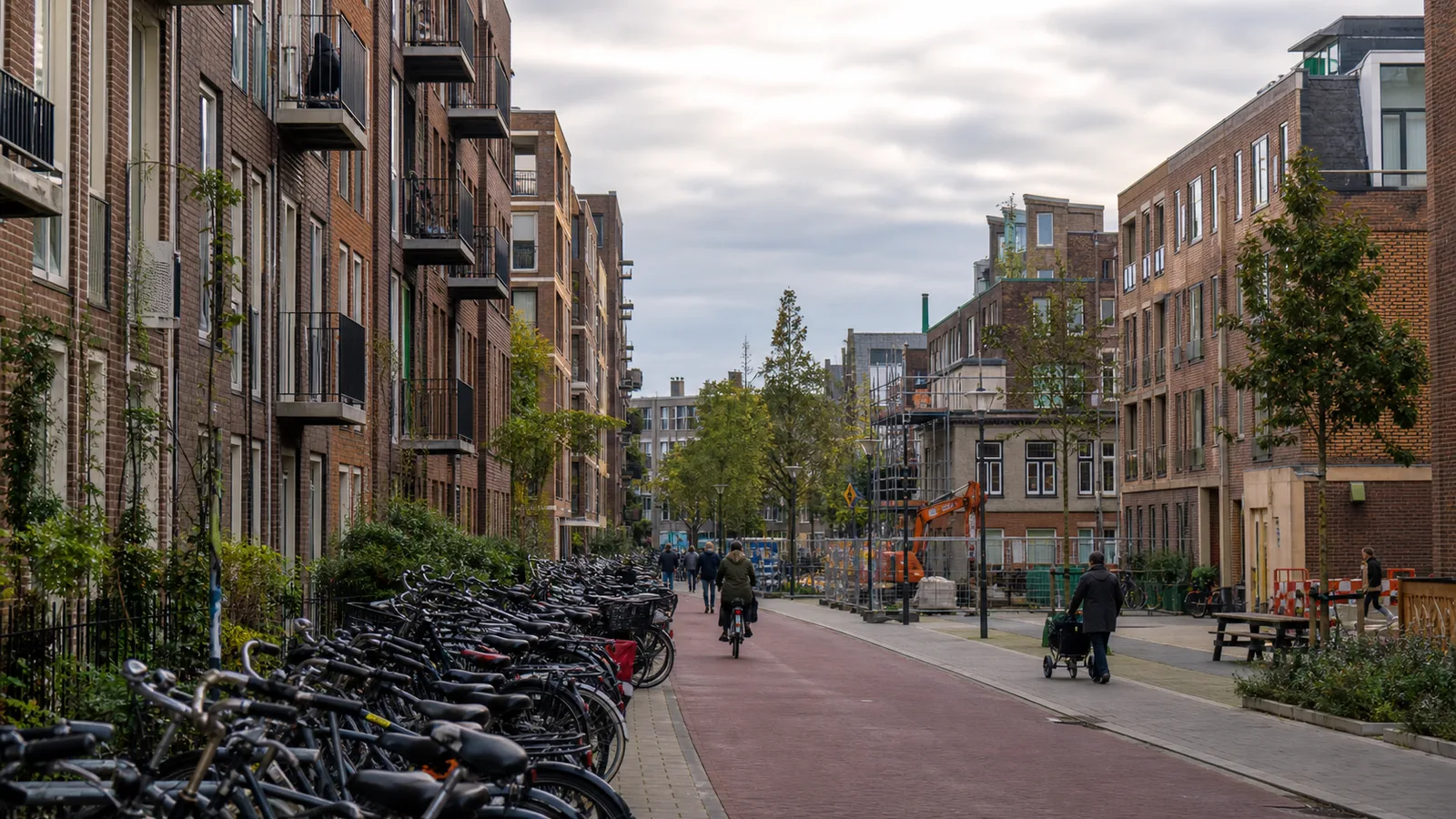
Utrecht still likes Utrecht. In the municipality's latest residents' survey, 78% said they were proud of the city. Most adults feel healthy, three quarters are satisfied with their lives, and the local economy continues to outperform broader regional and national trends.
That confidence is the starting point for the Utrecht Monitor 2026, not its conclusion. Published by the municipality in April, the Monitor brings together data through the first quarter of this year and residents' experiences from autumn 2025. It describes a city that has become larger, denser, richer and more international — while accumulating more of the pressures associated with a major city.
The tension matters for residents who do not routinely read municipal research in Dutch. Utrecht's success has not disappeared. But the conditions around it are changing, and those changes are increasingly visible in ordinary streets, housing costs and the amount of healthy life people can expect in different parts of the city.
A city becoming denser
Utrecht added around 40,000 residents over the past decade and had 378,140 people on 1 January 2026. Over roughly the same period, its housing stock grew by 22,000 homes, reaching 171,400 at the start of this year.
This is not simply a story of the city spreading outwards. The Monitor says recent population growth has partly followed the construction of more homes within existing residential areas. Population density rose from about 3,600 people per square kilometre in 2016 to 4,033 in early 2026.
In practical terms, more homes and residents share streets, parks, cycle routes, schools, energy connections and other infrastructure that cannot always expand at the same pace. Construction itself becomes part of daily life while the city builds the capacity it needs.
Growth has slowed recently: Utrecht gained 1,405 residents during 2025, a historically modest increase for the city. The ten-year change nevertheless remains substantial. Utrecht has also become more international, shaped by knowledge workers, students and newcomers from elsewhere in Europe, India, Syria and, since 2022, Ukraine.
More pressure in public space
Residents' reports suggest that the shared city is becoming harder to manage. The proportion who frequently experience nuisance from rubbish and litter rose from 32% in 2015 to 44% in 2025. Compared with ten years ago, residents also report more noise, construction nuisance and dangerous traffic behaviour, while confidence in the future of their neighbourhood and city has weakened.
The Monitor does not claim that population growth directly caused every negative trend. Its own assessment is more careful: some pressures come with growth and the arrival of more big-city problems; others reflect national social trends and increasing polarisation.
Safety data needs the same proportion. Total recorded crime rose by 10% in 2025, driven particularly by increases in residential burglary, theft from cars, bicycle theft and violence. That reverses part of an earlier decline, but it does not by itself show that Utrecht has become broadly unsafe. The wider picture includes stable social cohesion and high participation: 84% of residents take part through work, education, sport, culture or neighbourhood activity.
Not everyone experiences the same Utrecht
Citywide averages conceal some of the Monitor's most important findings. Utrecht scores comparatively well on broad well-being, and 79% of adults say they feel healthy. Those advantages are not distributed evenly.
Residents of Overvecht, Noordwest and Zuidwest have the fewest years lived in good health. At neighbourhood level, the difference reaches as much as 13 years. This is a gap in healthy years, not a claim that overall life expectancy differs by 13 years.
The municipality links widening health inequalities particularly to differences in financial security and education. Housing pressure reinforces that uneven experience: the share of income spent on housing has risen much faster for private-sector tenants, young people and first-time buyers than for homeowners.
Place matters in other ways too. Indicators of liveability and safety more often moved in a negative direction in Binnenstad and Overvecht. In Vleuten–De Meern, residents expressed markedly lower trust in politics and in the future of their neighbourhood and city. There is no single Utrecht experience of growth.
Growth without losing what works
The Monitor's broad assessment is not one of urban decline. Utrecht remains a leading employment city. Unemployment has nearly halved over ten years to 4.4%, economic growth in the urban region has consistently exceeded the province and the Netherlands, and broader well-being is around the national average — better than in other large Dutch cities.
The more useful reading is that Utrecht's strengths and pressures now coexist. A popular city can remain a good place to live while rubbish becomes more intrusive, infrastructure is stretched and the benefits of prosperity land unevenly.
For Utrecht, the next phase of growth is therefore less about whether the city attracts people and investment. It is about whether housing, public space and services can absorb that success without widening the distance between neighbourhoods or wearing down the everyday qualities that made the city attractive in the first place.
Sources
- Utrecht Monitor 2026 — English summary
Published by Municipality of Utrecht
- Utrecht’s latest monitor shows growth alongside rising nuisance
Published by Gemeente Utrecht
- Population development
Published by Municipality of Utrecht
- Housing stock
Published by Municipality of Utrecht
- Feeling for Utrecht
Published by Municipality of Utrecht
- Adult health and well-being
Published by Municipality of Utrecht
- Crime
Published by Municipality of Utrecht
- Safety perception and nuisance
Published by Municipality of Utrecht