Attributed reporting
Utrecht light-activated cancer therapy moves towards first patient study
UMC Utrecht and university spin-off Lumox plan a first patient study of a light-activated drug designed to target head and neck tumours while limiting damage to healthy tissue, with funding from the Dutch Cancer Society.
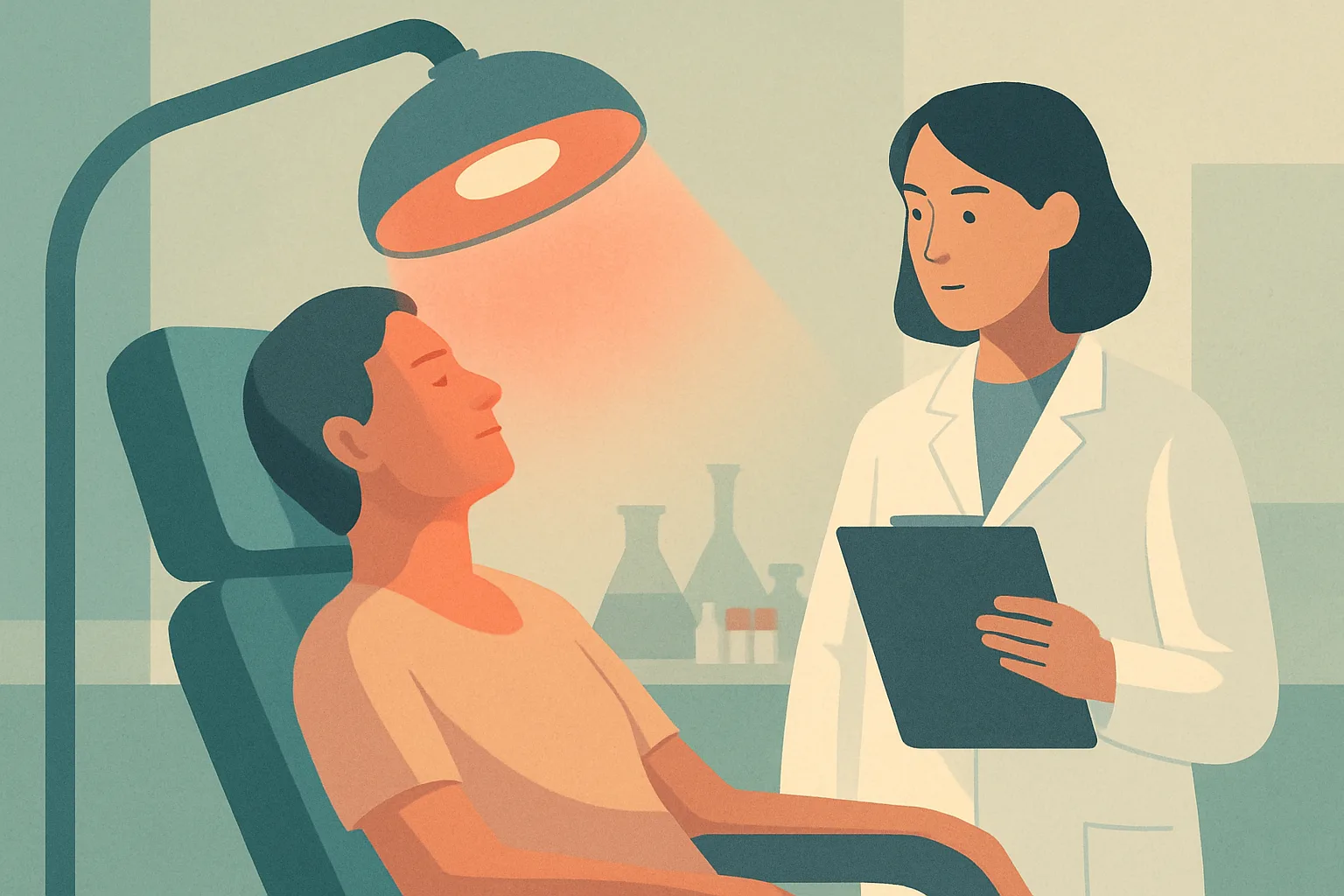
UMC Utrecht is preparing to test a cancer drug designed to become active where doctors apply light. The hospital and Utrecht biotech start-up Lumox announced on 15 July that they plan a first patient study of the light-activated therapy, aimed initially at people with tumours in the head and neck.
The approach, described by UMC Utrecht and the Dutch Cancer Society (KWF Kankerbestrijding), uses "nanobodies" — small proteins originally identified in llama blood — engineered to seek out and attach to cancer cells. Each nanobody carries a light-sensitive drug. Once enough of it has gathered in a tumour, doctors briefly expose the area to a special lamp, which activates the drug only there. According to KWF, the nanobodies clear the body quickly enough that a full treatment could be completed within a single day.
For many head and neck cancer patients today, surgery is the primary treatment. It is often effective, but UMC Utrecht notes it can permanently affect a patient's appearance, speech, swallowing and eating; radiation and chemotherapy, the hospital says, also frequently leave lasting side effects. "As a surgeon I see every day how much impact our treatments can have on a patient's life," said Remco de Bree, professor of Head and Neck Surgical Oncology at UMC Utrecht and leader of the new patient study, in the hospital's announcement. "We've made great strides, but there is still a need for treatments that are less burdensome while remaining highly effective."
The underlying science traces back roughly ten years, to the Utrecht University research group of Sabrina Santos Oliveira, which laid the groundwork for using nanobodies this way. Two researchers from that group, Irati Beltrán Hernández and Sebas Pronk, went on to found Lumox as a university spin-off to move the drug more quickly toward patients. "There are many beautiful discoveries that never reach a patient," Pronk said, according to UMC Utrecht. "We wanted to make sure this wasn't going to be one of them." Beltrán Hernández described the aim as targeting cancer as precisely as possible: activating the drug only where the tumour sits keeps far more control over the treatment, she said.
UMC Utrecht will conduct the clinical study and care for patients; Lumox is developing and producing the drug intended for the study. Pronk said KWF funding alone was not enough to bring a treatment through patient trials, which is why the researchers built a company that could attract outside investment as well — including for a final safety study required before the patient trial could start.
The funders' own accounts of the size of that investment differ slightly. KWF's own announcement headlines an investment of €4 million in the first patient study; UMC Utrecht's account describes KWF putting in "just over €4.5 million" to cover both the patient study and part of the drug's production. Both note that KWF and the Alpe d'HuZes fundraising campaign had already backed the underlying research for years, including three earlier projects in Oliveira's group.
The planned phase 1 study will assess safety, dosing and feasibility in patients with head and neck tumours, such as those in the oral cavity; it will not establish that the treatment works. If subsequent research demonstrates its safety and effectiveness, researchers hope to extend the light-activated approach to other cancer types. They say the underlying technology is designed to be adaptable to different tumours. De Bree called KWF's investment "an enormous step forward" for patients who, in his words, deserve to benefit from progress sooner rather than later.
The work sits within Utrecht Cancer, a consortium on Utrecht Science Park that groups UMC Utrecht, two Utrecht University faculties, the Hubrecht Institute and the Princess Máxima Center, bringing together more than 1,200 researchers working on cancer treatment, quality of life and survival rates.
Sources
- Kanker uitschakelen met licht
Published by UMC Utrecht
- Kanker uitschakelen met licht: KWF investeert €4 miljoen in eerste patiëntenstudie
Published by KWF Kankerbestrijding
- Sabrina Oliveira - Pharmaceutics
Published by Utrecht University