
Opinion
Utrecht Knows Which Vehicles Are Too Loud. Why Is It Only Warning Them?
A small minority of motorcycles, scooters and cars creates a disproportionate amount of noise. Utrecht has measured the problem. It should now build an enforcement programme—and demand the national powers needed to finish it.
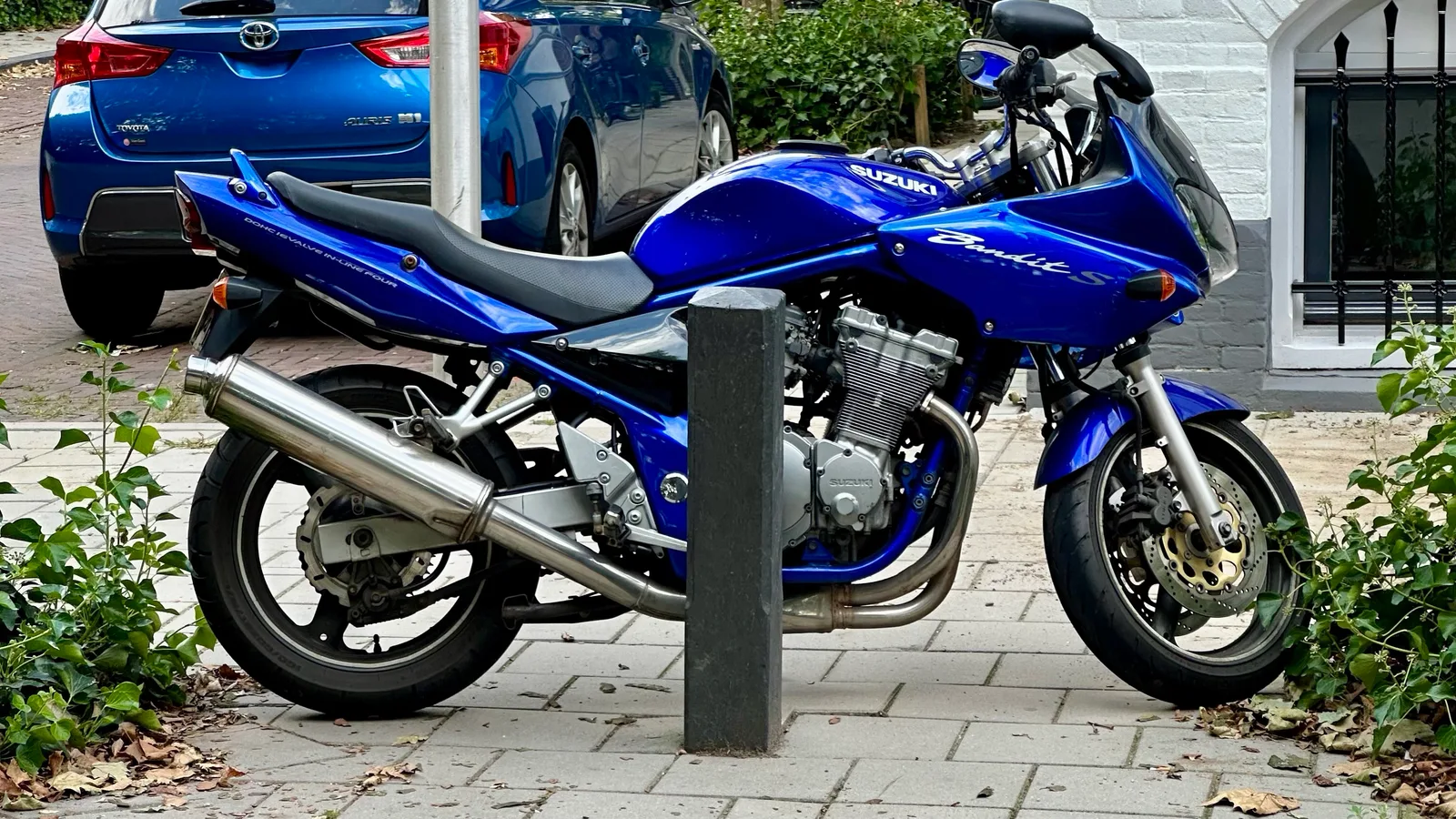
There is ordinary city noise, and then there is the motorcycle that announces itself three streets before it arrives.
Utrecht will never—and should never—be silent. A growing city sounds like people, cafés, construction, buses, bicycles and deliveries. But liveliness is not the same thing as one modified exhaust or aggressively accelerating scooter forcing hundreds of people to hear it. We have become too willing to treat that kind of noise as an unavoidable price of urban life.
Utrecht's own evidence says otherwise.
The municipality and TNO monitored traffic on the Wolgadreef, Amsterdamsestraatweg and Mr. Tripkade, three places chosen because residents frequently report noise nuisance there. They classified a passing vehicle as loud when it produced at least 80 dB(A). Only 0.8 per cent of measured traffic crossed that threshold. Yet the municipality concluded that this small minority causes a large part of the nuisance residents experience.
Motorcycles accounted for 40 per cent of the loud passages identified in Utrecht's public summary. Bromfietsen and scooters accounted for 28 per cent, and cars for 22 per cent. Loud events also often coincided with speeding. These figures are specific to the measured streets and periods; TNO explicitly warns against treating them as a citywide census. But they establish the point that matters: the worst peaks are not an inevitable product of every journey. They are concentrated among a small group of vehicles and behaviours.
That should make the problem easier to tackle. Instead, Utrecht is preparing another warning.
The city says it plans to test displays on the Wolgadreef and Mr. Tripkade that show “Te Luid” when a vehicle exceeds 80 dB. Warning drivers is sensible as an experiment. It is not an adequate destination for the policy. A driver with a defective exhaust may take notice. Someone who paid to make a vehicle louder, or who accelerates hard precisely to be heard, is unlikely to be transformed by an illuminated sign.
Rotterdam has not solved this either
Rotterdam is often mentioned as the city already introducing a “lawaaiflitser.” The comparison is useful, but not quite for the reason people think.
Rotterdam has installed noise monitors and information displays that warn drivers above a threshold of 83 dB at 7.5 metres. It has mapped peaks at several locations and wants to experiment further. But its monitoring equipment is not yet issuing automatic fines. Rotterdam's own reporting says reliable attribution to an individual vehicle, certification and a legally sound enforcement process remain obstacles.
The national government reached much the same conclusion in answers published in late 2025. Some systems can distinguish individual vehicles and estimate their noise, but that is not yet enough for automatic enforcement. A photograph cannot by itself establish that the sound was unnecessary, while a vehicle can produce an antisocial peak without exceeding the technical maximum registered for its model. The government says a plan for digital enforcement would still need to be worked out with the Public Prosecution Service, alongside a technically and legally robust roadside measurement.
In other words, Rotterdam is not taxing noisy vehicles. It is wrestling with the same gap as Utrecht: cities can detect the nuisance more easily than they can punish it.
Do not wait for the perfect camera
Utrecht cannot create a new municipal road tax based on vehicle noise tomorrow. Vehicle standards, road-traffic offences and motor-vehicle taxation are principally national matters. Even a national research report on excessive vehicle noise concludes that a noise-linked motor-vehicle tax would require tax legislation to be amended. “Make noisy vehicles pay” is a defensible principle; pretending the city already possesses that particular tax instrument is not.
But legal limits are not an excuse for municipal passivity.
First, Utrecht should publish a permanent noise-peak dashboard showing where and when excessive vehicle noise occurs, without retaining personal data that is not needed for public reporting. The city already knows how to measure. Residents should be able to see whether conditions improve and where enforcement is warranted.
Second, warning displays should be paired with targeted enforcement days. Police can already act against unnecessary noise and vehicles with faulty exhausts. Measurement data can tell officers where and when the small offending group is most likely to pass. A system that cannot yet mail a fine automatically can still make scarce enforcement far less random.
Third, the city should treat street design as noise policy. Lower speeds and layouts that discourage hard acceleration address both steady traffic noise and the behaviour behind many extreme peaks. Quiet asphalt matters on faster roads, where tyre contact becomes a dominant source. Delivery windows, weight restrictions and cleaner city logistics can reduce the burden of heavy traffic in dense residential streets. These measures will not replace enforcement against modified motorcycles and scooters; they solve a different part of the same problem.
Finally, Utrecht should ask The Hague for a defined legal trial—not another open-ended technical study. Together with Rotterdam, Amsterdam and The Hague, it should propose a standard for certified roadside measurements, rules for evidence and privacy, an appeals process, and automatic fines restricted initially to the most extreme and clearly attributable cases. Set an evaluation date and publish the false-positive rate. If the equipment cannot meet the standard, say so. If it can, start enforcing.
Noise is a health question
This is not merely an argument about irritation. Utrecht's latest sustainability reporting says roughly 55 per cent of residents live at a location exposed to more than 55 dB of road-traffic noise, and 29 per cent often experience traffic-noise nuisance. In most Utrecht neighbourhoods, reported nuisance from road traffic has increased over the past fifteen years.
Those annual exposure figures are not interchangeable with the 80 dB peaks recorded in the vehicle trial. One describes sustained environmental burden; the other identifies disruptive individual events. Both matter. The RIVM links environmental noise to sleep disturbance, stress responses, high blood pressure and increased cardiovascular risk. Its guidance says scooters and bromfietsen are the leading road-traffic source of severe sleep disturbance nationally.
A city can grow without accepting every decibel growth produces. It can move freight at sensible hours, design streets for lower speeds, electrify the vehicles under its influence and protect quiet places. It can also draw a sharper line around the person who turns one journey into a disturbance for an entire neighbourhood.
Utrecht has already found the loudest vehicles. It has counted them, classified them and demonstrated that they are a small minority. The next display should not merely tell their drivers what the city already knows. It should tell them what happens next.
Sources
- Monitoring luide voertuigen in Utrecht
Published by TNO
- Geluid en trillingen — proef met lawaaiflitspaal
Published by Gemeente Utrecht
- Duurzame leefomgeving: geluidhinder
Published by Onderzoek Utrecht
- Stand van zaken Rotterdamse Verkeersaso Aanpak
Published by Gemeente Rotterdam
- Antwoorden Kamervragen over overlast door te luide voertuigen en lawaaiflitsers
Published by Ministerie van Infrastructuur en Waterstaat
- Onderzoek aanpak overlast door luide voertuigen
Published by Rijksoverheid
- Hoeveel geluid mag mijn motorvoertuig of bromfiets maken?
Published by Rijksoverheid
- Effecten van omgevingsgeluid op de slaap
Published by RIVM
- Effecten van omgevingsgeluid op hart- en vaatziekten en overige aandoeningen
Published by RIVM
- Environmental noise guidelines for the European Region
Published by World Health Organization