
Attributed reporting
Utrecht pharmacy lab reports 5% electricity cut and higher job satisfaction
A Utrecht University lab sustainability project saved energy, while surveys found high satisfaction and stronger motivation among participants.
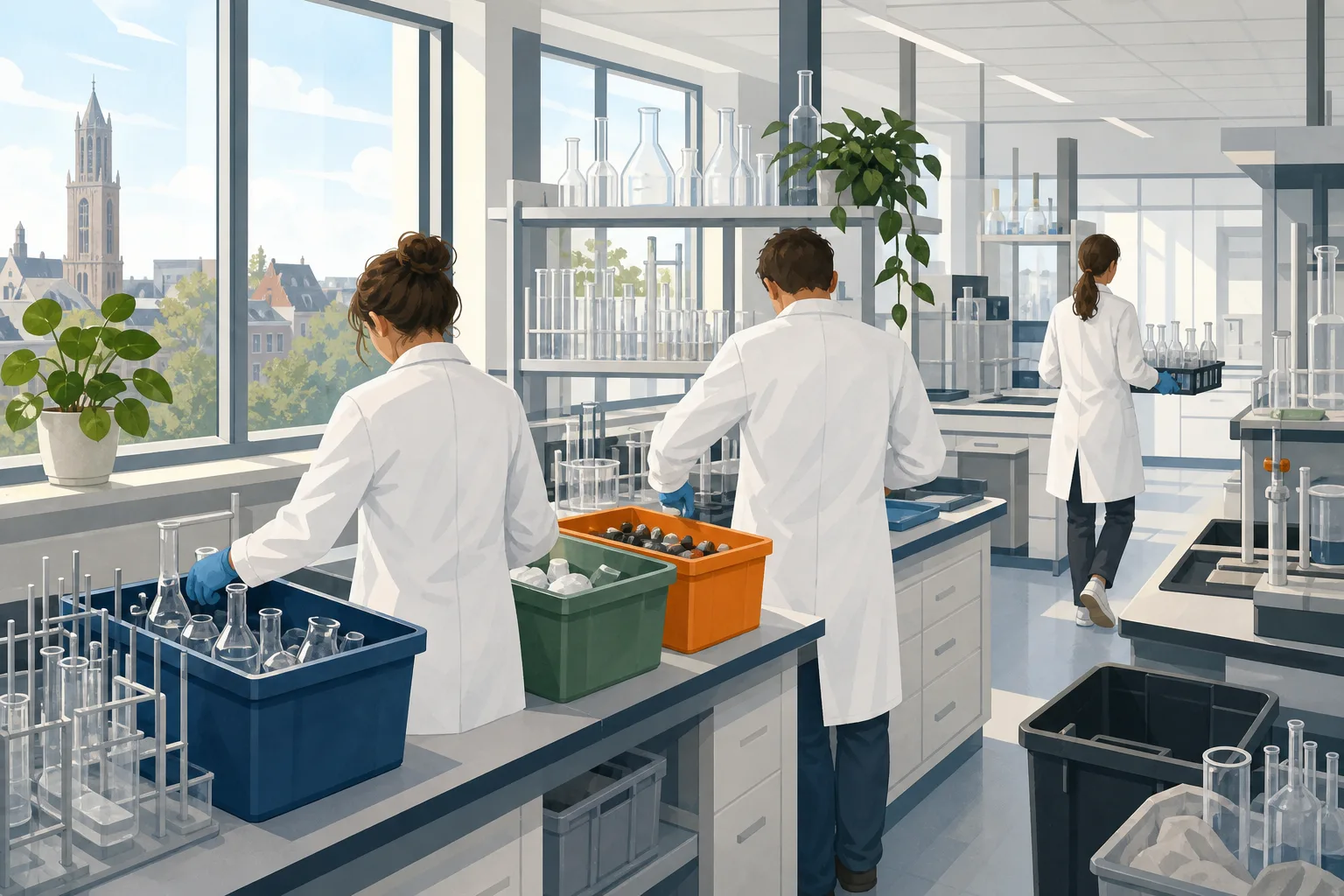
Laboratories are among the most energy-hungry places on a university campus, and they produce a steady stream of waste. At Utrecht University's Department of Pharmaceutical Sciences, researchers have tried to change that from the bench up. Monitoring found lower electricity use after sustainability measures were introduced, while participant surveys found high satisfaction and stronger motivation for sustainable practices.
What the department did
The university reported on 26 October 2026 that researchers, lecturers, students and technicians in the department pursued certification under LEAF, the Laboratory Efficiency Assessment Framework, an international programme that assesses laboratory sustainability, including energy efficiency, waste reduction and the reuse of materials.
The idea began with PhD student Greta Di Marco, who proposed it to her supervisor, Professor Tina Vermonden of the Division of Pharmaceutics. The division aimed for LEAF Bronze, the entry level. According to the university, PhD student Elise Heesbeen started a similar effort in the Division of Pharmacology at about the same time.
Before changing anything, the team measured its waste, energy use and staff motivation to set a baseline. It then reviewed and mapped lab processes and checked its practices again after certification. Sustainability work was built into PhD projects, staff could spend some working hours on it with their managers' backing, and progress was reported regularly at division meetings.
The reported results
The university says Pharmaceutics reached LEAF Bronze within a year, reportedly the first group in the Faculty of Science to do so, and later reached LEAF Gold, skipping the Silver level.
A peer-reviewed case study published in RSC Advances reported that post-implementation monitoring of a 910-square-metre facility found a 5% reduction in total electricity use and a 38% reduction in the electricity used by targeted equipment. The study calculated annual savings of 15 megawatt-hours, 2.9 tonnes of carbon-dioxide equivalent and €1,500. It also reported improved separation of plastic and paper waste, while hazardous-waste volumes remained stable.
Surveys of 99 lab users and 18 LEAF-team members found high satisfaction, increased motivation for sustainable practices and perceived benefits for lab organisation, safety and team cohesion. These are reported survey findings, rather than proof that the programme alone caused changes in job satisfaction. The university also reported that supplies became easier to find and fewer new items were ordered.
Vermonden extrapolated the division's €1,500 electricity saving to roughly €75,000 a year if every lab at the university took part, with larger savings if offices joined. That university-wide figure is a projection based on assumptions, not a measured result.
What made it work
The interviewees credit a mix of bottom-up initiative and top-down support, and permanent teams with clearly defined responsibilities, so that the work does not depend on a few enthusiasts. Leading by example, they said, lowered the barrier for hesitant groups. According to the university, faculties are funding staff roles to support the work.
Limits and context
The detailed environmental results come from monitoring one 910-square-metre facility, and the social findings rely on participant surveys. The case study describes implementation in the Department of Pharmaceutical Sciences and a partial assessment of the university's wider laboratory footprint; its findings should not be treated as a controlled estimate of what every lab would achieve.
Utrecht University aims for all of its labs to hold LEAF Bronze by 2030. The measured saving in one facility is modest, but the programme is intended to be repeated across the campus.
Sources
- At the Department of Pharmaceutical Sciences, making labs more sustainable has also boosted job satisfaction and team spirit
Published by Utrecht University
- From grassroots to strategy: advancing laboratory sustainability at Utrecht university
Published by RSC Advances