
Attributed reporting
A 1,700-year-old fragment of the Odyssey turns up in Utrecht University's library
A researcher combing through decades-old manuscripts recognized Greek verses that had been catalogued as an unremarkable seventh-century text — one of around thirty comparable fragments worldwide, according to Utrecht University.
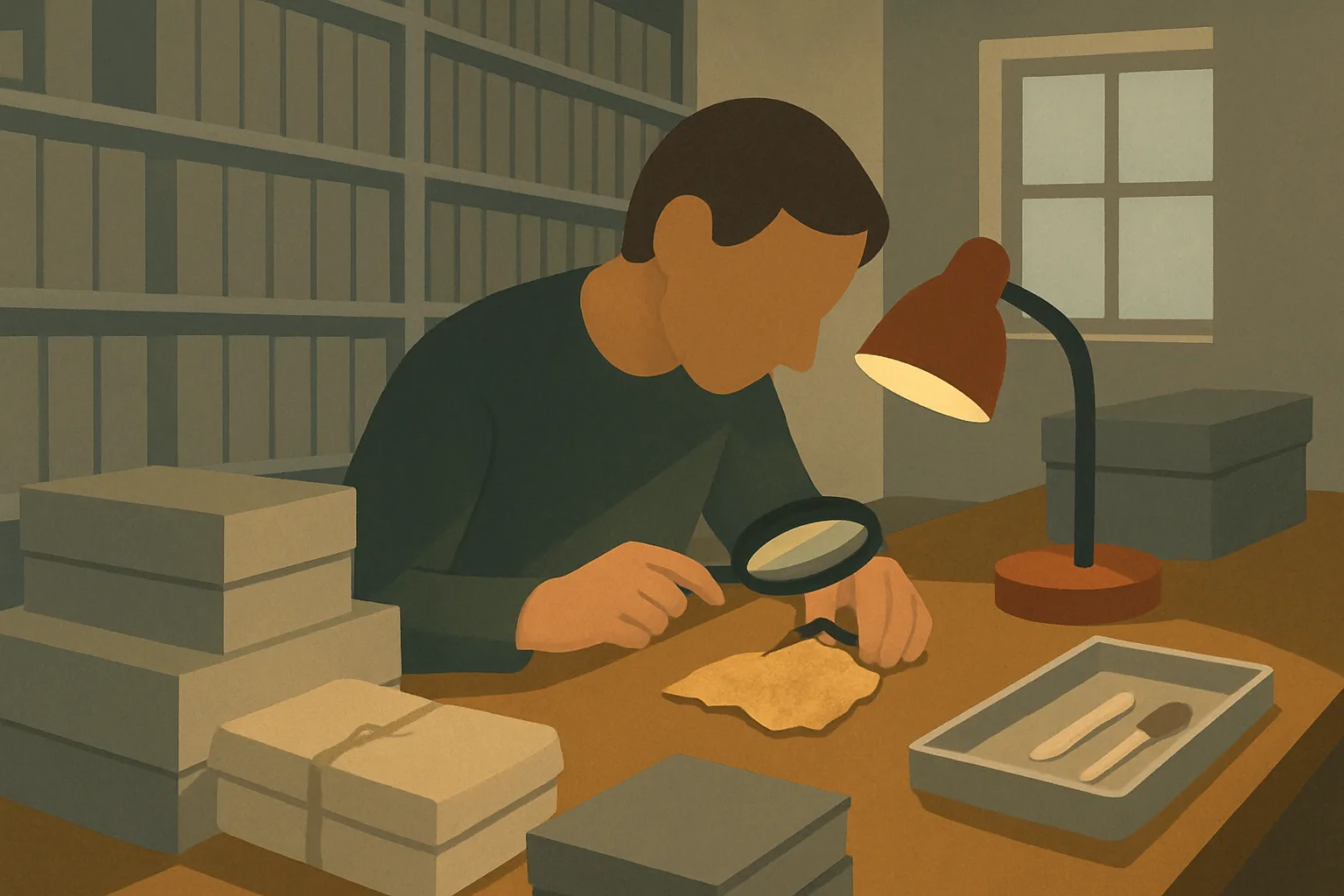
A small piece of parchment that sat in Utrecht University's Special Collections for decades, catalogued as an unremarkable seventh-century text, has turned out to be a roughly 1,700-year-old fragment of Homer's Odyssey. The university announced the discovery on Monday, crediting classicist Mark de Kreij of Radboud University, who came across the fragment while studying the collection's ancient manuscripts.
De Kreij recognized Greek wording that pointed not to the minor text the fragment had long been filed under, but to one of antiquity's best-known poems. Closer study showed it preserves verses from Book 12 of the Odyssey, the passage in which the sun god Helios discovers that Odysseus's starving crew have slaughtered and eaten his sacred cattle — what the university's announcement calls "a crucial tipping point" in the story, since the act seals the crew's fate before Odysseus can stop them.
"Written on this slip of parchment are verses of book 12 of the Odyssey," the university's announcement states, adding that "there are only around thirty fragments like it worldwide." Utrecht University dates the fragment to the third or fourth century CE, making it one of the older surviving witnesses to Homer's text.
A pocket-sized Odyssey
The fragment is not a scroll but a scrap of a parchment codex, a bound book, which the university says would once have held the complete Odyssey in a size comparable to a modern Kindle. Its physical form fits a broader pattern noted in the announcement: books of Homer that were small and personal rather than grand library volumes, suggesting the manuscript may have belonged to an individual reader with a taste for the classics, possibly in the Fayum oasis in Egypt, around 300 CE.
Overlooked for seventy years
Utrecht University acquired the wider collection it belongs to in the mid-twentieth century, from the heirs of the German scholar Carl Schmidt. Most of that collection consists of early Christian texts written in Coptic, which have been extensively studied since. A smaller batch of Egyptian and Greek papyri and parchment fragments, including the piece now identified as Homer, went largely unexamined until de Kreij's current research project turned to it.
The fragment is catalogued as Utrecht Gr. Ms. B6.39a. De Kreij intends to publish it, along with the rest of the previously unstudied papyri and parchment pieces in the Utrecht collection, in a forthcoming volume titled Hieratic, Demotic, Greek, and Coptic Texts in the Utrecht University Collection (P.Utr.), giving other researchers full access to material that has sat in the university's holdings, unread, since before most of its current students were born.
Sources
- 4th-century fragment of the Odyssey discovered in Utrecht University Library
Published by Utrecht University
- Dr M. de Kreij (Mark)
Published by Radboud University