
Attributed reporting
Utrecht researchers join two €7.5m national projects on clean water, nature and farming
Two newly funded national research consortia involving Utrecht University scientists plan to study clean water for people and nature and stalled progress between water, nature and agriculture.
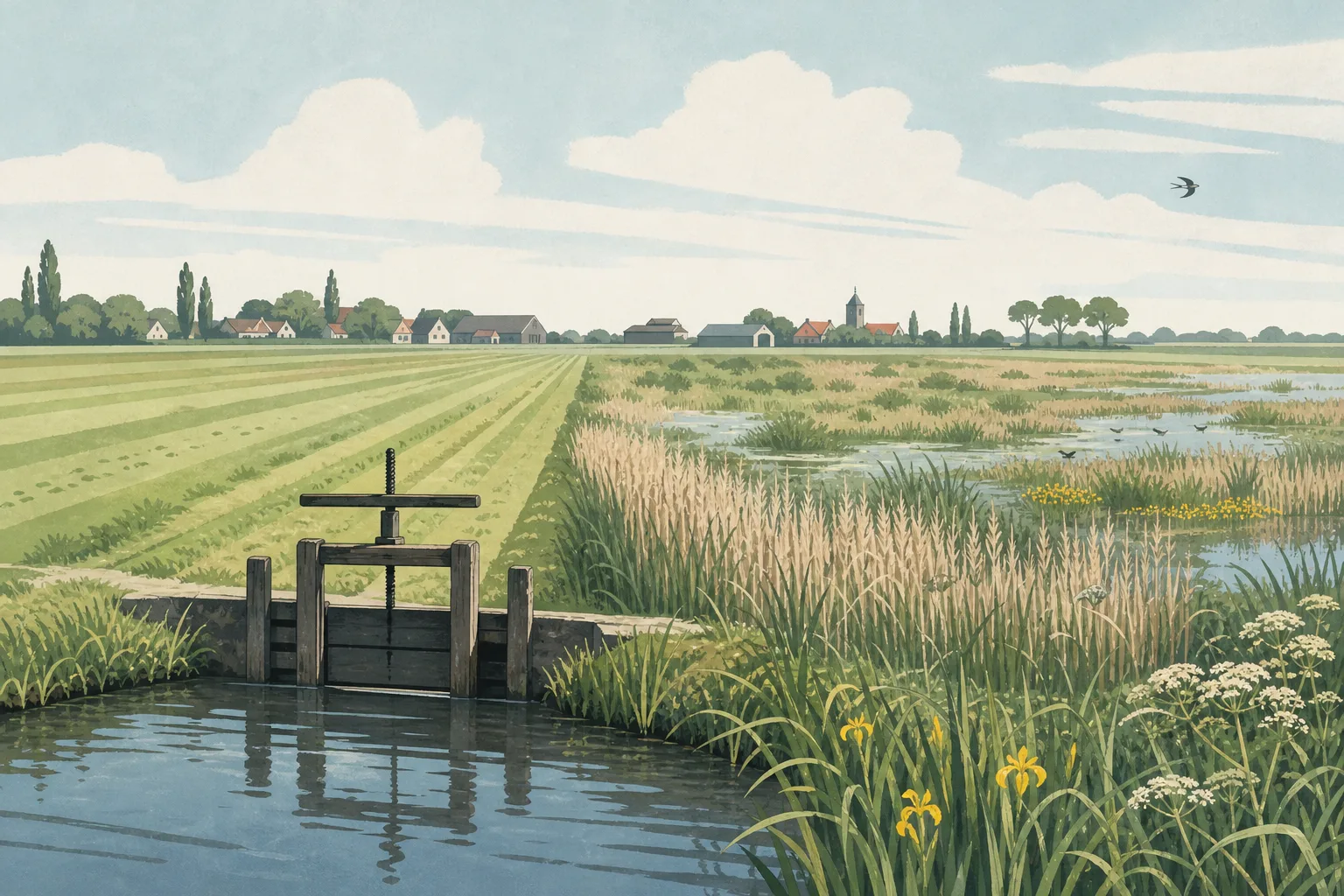
Two new national research projects on the Netherlands' water problems, each with total project funding of roughly €7.5 million, will include researchers from Utrecht University. Utrecht University announced them on 11 and 12 November 2026. Both are funded through the Dutch Research Council's NWA-ORC programme, part of the National Science Agenda.
For residents of a province where farmland, nature reserves and fast-growing towns share the same water, the questions are close to home. Neither project has produced results yet. These are funded research plans, and what they find will only emerge over the coming years.
RESOLVE: why progress stalls
According to Utrecht University, RESOLVE has €7.5 million in funding over six years. It is led by Lisette de Senerpont Domis of the Netherlands Institute of Ecology (NIOO-KNAW) and brings together more than 50 researchers and partners from universities, research institutes, governments, NGOs, businesses and stakeholder organisations.
The project starts from a familiar frustration: progress on water quality, biodiversity and sustainable agriculture often stalls because the goals can pull against one another. RESOLVE aims to find out why, and to develop and test approaches in real landscapes, looking at how knowledge, interests and governance can be combined.
Three researchers at Utrecht University's Copernicus Institute of Sustainable Development will co-lead two of the research areas: Anne Beaulieu, professor of knowledge infrastructures for sustainability; Hens Runhaar, professor of sustainable governance; and Susanne Wuijts, who holds a joint appointment at Utrecht University and the national health institute RIVM. Two PhD researchers will be recruited in Utrecht. One will rethink ecological monitoring so that it includes more forms of knowledge, including that of people who manage these landscapes. The other will study how governance and social arrangements can adapt to support change.
Runhaar said that too often the challenges are tackled separately, according to the university. Beaulieu said the team will consider how solutions meet both passive and active resistance.
TRANSWATER: aiming for clean water by 2100
The second project, TRANSWATER, has total project funding of €7.46 million, according to Utrecht University and TU Delft. It is led by Thom Bogaard, professor of hydrology and geomorphology at TU Delft, and joins TU Delft, Wageningen University & Research, Utrecht University, the University of Twente, VU Amsterdam, NIOO-KNAW, several universities of applied sciences, the knowledge institutes KWR, RIVM and Deltares, as well as drinking water companies, nature and farming organisations and regional water authorities.
Its stated ambition is a climate-proof water system by 2100 that supplies enough clean water for both people and nature, with groundwater and surface water remaining reliable sources for drinking water and ecosystems. The university lists population growth, economic development, climate change, droughts and heatwaves as pressures on supply.
Researchers will work with stakeholders in what the project calls "Transition Ateliers" to define research questions. The project is due to end with a practical decision-support model and a dashboard for water management.
Utrecht's contribution spans three faculties:
- Geosciences: Michelle van Vliet, Dries Hegger, Stefanie Lutz and Jasper Griffioen study how climate extremes affect water quality and how transition routes could improve water for people and nature.
- Law, Economics and Governance: Herman Kasper Gilissen, Marleen van Rijswick and Jasper van Kempen examine the legal role in the water transition and the safeguards it needs. A postdoc will join them.
- Veterinary Medicine (IRAS): Anke Huss, Ana Maria de Roda Husman and Roel Vermeulen are building a framework to assess whether water that is good for nature is also good for human health. A PhD student will join them.
What to keep in mind
The descriptions above come from the university's announcements, which present the projects' aims rather than outcomes. The local benefit, if any, will depend on whether the findings are adopted by water authorities, farmers and policymakers. Utrecht is one partner among many in both consortia, and neither announcement names specific Utrecht locations for fieldwork.
Sources
- Large-scale collaboration to break deadlock between water, nature and agriculture
Published by Utrecht University
- 7.45 million to break the deadlock between water, nature and farming
Published by University of Twente
- Sufficient clean water for both people and nature
Published by Utrecht University
- Two Delft consortia receive NWA-ORC funding for research with societal impact
Published by TU Delft