
Attributed reporting
Utrecht researchers use eye-tracking glasses to study why women feel unsafe cycling after dark
A Hogeschool Utrecht study is using eye-tracking glasses and design research to examine what makes cycling routes feel unsafe, especially for women, and what could improve them.
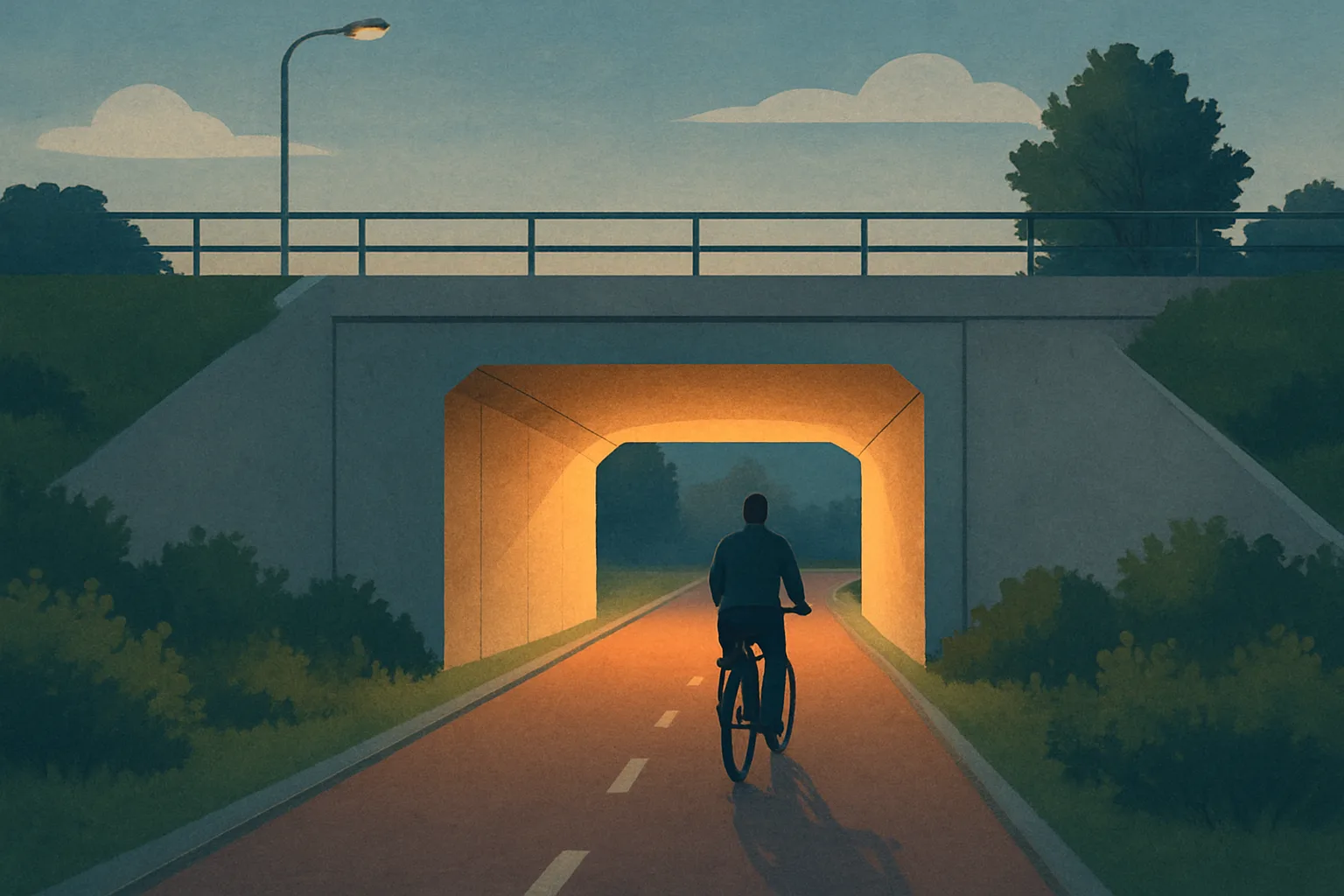
Traffic safety and people's sense of safety are not always the same. That gap is the subject of a research project that started in September in the province of Utrecht. Participants will cycle selected sections of a regional cycle route wearing eye-tracking glasses, allowing researchers to record where they look and how they react to their surroundings.
The province of Utrecht announced the project in a press release distributed through ANP Persportaal. It is being carried out by Hogeschool Utrecht, the applied sciences university, and examines both the "objective" and "subjective" safety of women cycling on doorfietsroutes, the region's long-distance cycle routes, and other key connections. The province says women and girls in particular report feeling unsafe in certain situations in public space, and that cycling and pedestrian tunnels are often mentioned as places where that sense of safety comes under pressure. Among people who avoid cycling after dark, feelings of insecurity are a common reason.
The eye-tracking work should help researchers examine how darkness, lighting, the layout of public space and unexpected situations affect cyclists' sense of safety in the moment. It sits alongside a literature review, expert sessions and design research, and draws on a survey conducted earlier in 2026 among users of a provincial cycle route about their cycling experience, safety perception and wellbeing.
Lucas Harms, special lecturer in Smart & Sustainable Urban Mobility at Hogeschool Utrecht, said a safe cycling environment encompasses both traffic safety and how people experience a route. He linked a stronger sense of safety to greater willingness to cycle, as well as health, wellbeing and sustainable mobility. Saskia Heins, a senior researcher at the university, is also listed as a project contact.
The study sits alongside the province's ambition to become "the cycling region of Europe." Provincial policy aims for at least half of all trips shorter than 15 kilometres to be made by bicycle by 2028.
The research is intended to give policymakers and public-space designers practical guidance on interventions such as lighting, sightlines, greenery and route design that could make cyclists feel safer and more comfortable. It will result in a report with concrete recommendations, with the main findings due to be presented at a seminar in spring 2027.
Sources
- Onderzoek naar fietsen, veiligheid en gezondheid in de provincie Utrecht gestart
Published by Provincie Utrecht
- Nieuw onderzoek naar veiligere fietsroutes in Utrecht
Published by verkeersbureaus.info
- Fietsregio Utrecht op koers
Published by Provincie Utrecht